
How Recycling Construction Materials Supports a Circular Economy
Recycling construction materials is no longer just a good environmental gesture. It has become a practical and increasingly important part of how building, demolition, and refurbishment projects are managed across the UK. Construction work generates large volumes of waste, from concrete and bricks to timber, metals, plasterboard, and soils. If those materials are treated simply as rubbish, projects become more expensive, landfill use increases, and valuable resources are lost. If they are recovered and reused properly, the same materials can stay in circulation for longer and support a more efficient way of building.
That is where the circular economy comes in. In simple terms, a circular economy aims to keep materials in use for as long as possible, reduce waste, and recover value from products and resources that would otherwise be thrown away. Construction is one of the sectors where this principle can make a real difference. Projects already involve large amounts of raw material, heavy transport, and disposal costs. Even small improvements in how waste is separated, collected, and reused can have a noticeable impact on both cost and environmental performance.
Construction waste is too valuable to ignore
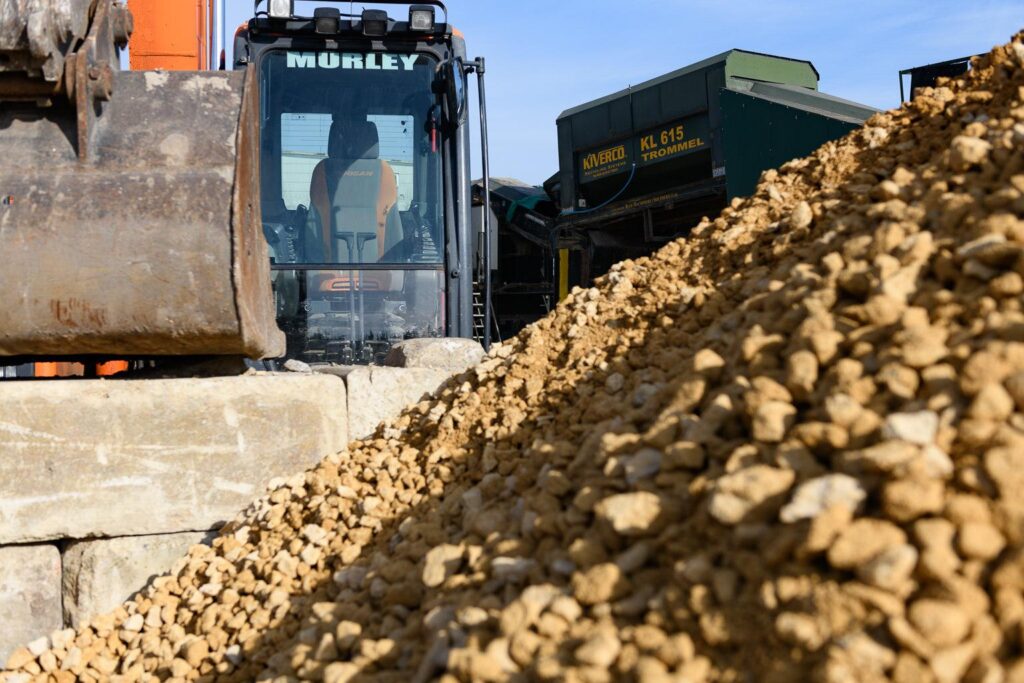
A large proportion of construction and demolition waste still has practical use after it leaves site. Concrete can be crushed and reused as aggregate. Bricks and hardcore can be recovered for sub-base applications. Metals can be recycled repeatedly with minimal loss of quality. Timber can be reused, processed, or recovered where appropriate. Soil can sometimes be screened and repurposed depending on its condition. When these materials are all mixed together in one waste stream, much of that value is lost. When they are sorted and handled properly, they become part of a resource cycle instead of a disposal problem.
This matters because the construction industry uses huge quantities of virgin material. Every time a suitable recovered material replaces newly extracted stone, sand, timber, or metal, pressure on natural resources is reduced. Recycling does not solve every issue in the sector, but it does reduce avoidable waste and makes better use of materials that have already been taken from the environment once.
The circular economy starts with better waste handling on site
The circular economy is often discussed in broad terms, but on a working construction site it starts with straightforward decisions. Waste needs to be identified, separated where possible, and sent through the correct route. If reusable or recyclable materials are thrown into a mixed skip without any thought, there is far less chance of recovering them at a useful level later. On the other hand, if site teams understand what they are dealing with and use the right containers or collection systems, recovery rates improve immediately.
This is one reason why planning matters before a project even begins. Waste streams should be considered alongside programme, logistics, and procurement. If demolition, strip-out, or groundworks are likely to create large quantities of brick, rubble, timber, or metal, there should already be a plan for how those materials will be managed. Businesses looking for broader commercial waste support often benefit from dealing with providers who can help with both collection and recovery rather than collection alone.
Why recycling construction materials helps control costs
There is a direct financial case for recycling construction materials. Disposal costs have risen, landfill remains expensive, and mixed waste is rarely the cheapest option once tax and haulage are taken into account. Projects that separate materials properly can often reduce the volume of waste classed as general disposal. That means fewer expensive mixed loads and more opportunity to direct suitable materials into recycling or recovery streams.
There is also the issue of efficiency. Poor waste handling leads to double handling, cluttered work areas, more vehicle movements, and avoidable disruption. A well-managed system with the right containers, collections, and tipping arrangements helps keep sites cleaner and safer. Over the life of a project, that can translate into measurable savings in labour time, transport planning, and skip usage.
Recovered materials have a real role in future construction
One of the strongest links between material recycling and the circular economy is what happens next. Recycled construction material is not only about reducing the amount sent to landfill. It is also about replacing new material where appropriate. Crushed concrete and similar recovered materials can be used in sub-bases, fill, and other applications. Reclaimed aggregates help reduce the need for freshly quarried alternatives. Recovered metals can return to manufacturing supply chains. Good-quality timber can sometimes be reused directly or diverted into other productive uses.
That shift matters because the construction sector depends so heavily on resource extraction. If more projects use recovered materials where specification allows, demand for virgin inputs can be reduced. This does not remove the need for new material altogether, but it does support a more balanced system where waste from one project becomes part of the input for another.
Transfer stations and tipping facilities play a key role
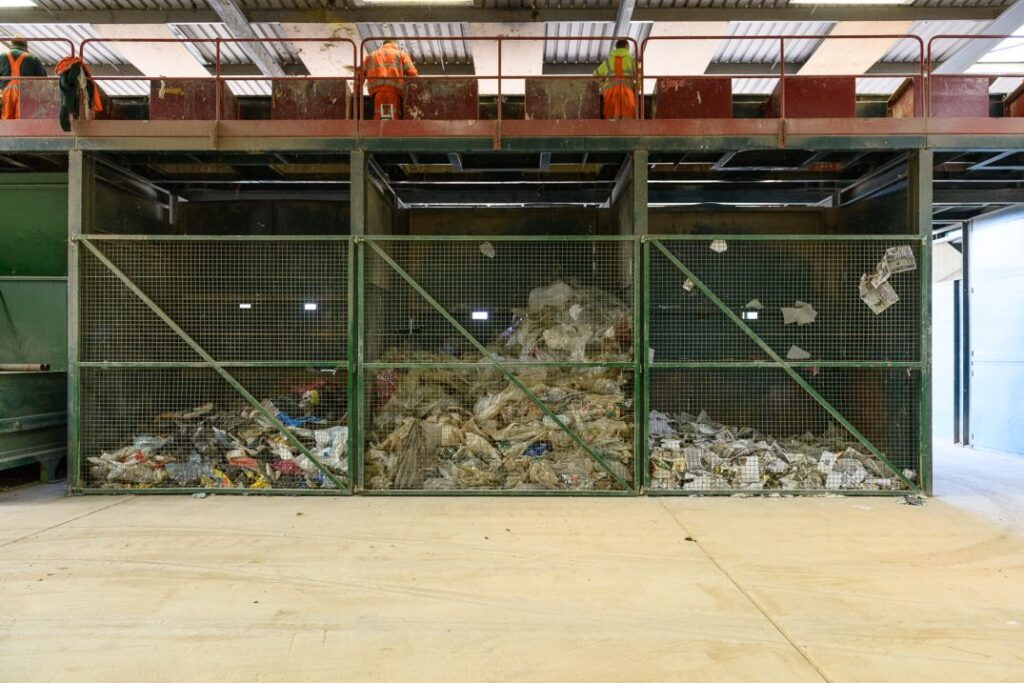
Material recycling does not happen by accident once waste leaves site. It depends on infrastructure that can receive, sort, process, and redirect materials properly. Waste transfer stations and tipping facilities are central to this. They provide the point where loads can be checked, separated, and prepared for onward recycling or recovery rather than simply going straight to landfill.
For construction firms, this is especially useful when dealing with mixed or changing waste streams across active jobs. Instead of relying on disposal alone, they can use a facility that supports segregation and proper routing. A dedicated site tipping and waste transfer service can help contractors keep vehicles moving while ensuring that recyclable materials are not lost in the process.
Skip hire still matters in a circular model
Skip hire remains one of the most practical tools for managing construction waste, but its value depends on how it is used. A skip should not be thought of as the end of the process. It is the first stage in moving materials off site safely and efficiently. The more accurately waste is loaded and managed, the better the outcome further down the chain. A skip full of well-understood material is much easier to process than one filled with mixed waste, contamination, or prohibited items.
This is why choosing the right collection method still matters. A project producing mainly bricks, concrete, timber, or metal has different needs from one generating a broad mixed stream. Using the correct skip sizes and services helps avoid unnecessary costs and makes recycling more realistic in practice. Businesses arranging commercial skip hire should think not only about collection frequency and size, but also about what recovery route is likely once the material leaves site.
Recycling construction materials also supports compliance
The circular economy is often presented as an environmental objective, but there is a compliance benefit as well. Construction businesses are expected to manage waste responsibly, document transfers correctly, and use licensed operators. The more structured the waste process is, the easier it becomes to demonstrate proper handling. This is important for contractors, developers, and principal contractors who need clear records and a reliable audit trail.
Clients are also asking more questions than they used to. Environmental performance now affects tenders, procurement standards, and reporting requirements. A business that can show it is reducing mixed waste and recovering more material is in a stronger position than one that treats all site waste as disposal. Recycling construction material is therefore not only about the site itself; it also affects how the business is viewed by clients and partners.
The barriers are real, but they are not impossible
There are still obstacles to better material recovery. Sites are busy, space can be limited, programmes are tight, and waste can be unpredictable. Some materials are contaminated or too mixed to recover economically. Teams may not always have time to separate everything perfectly. Those realities should be acknowledged. Even so, better outcomes are still possible when waste is planned for properly and handled by a provider with the right facilities.
Progress does not require perfection. A site does not need to recover every last item to support a circular economy. It only needs to improve on the default position of mixed disposal. Recovering more timber, separating more aggregates, or keeping metals out of general waste all contribute to the same goal: retaining more value in the system and reducing how much is simply thrown away.
Why this matters for the future of the industry
Construction will remain a resource-intensive sector, but that does not mean wasteful practices have to remain standard. Material shortages, cost pressures, landfill charges, and environmental expectations are all pushing the sector in the same direction. Recycling construction materials is one of the clearest and most practical ways to respond. It turns waste reduction into something measurable and useful rather than abstract.
As more projects adopt waste plans, segregated collections, recovered aggregates, and better transfer processes, the circular economy becomes less of a theory and more of a working model. The industry does not change overnight, but every load recovered properly instead of being landfilled moves it in the right direction.
Recycling construction materials supports a circular economy because it keeps useful resources in circulation, reduces landfill dependence, and makes better use of what projects already produce. It cuts waste, helps control disposal costs, supports compliance, and creates opportunities to replace virgin materials with recovered ones where suitable.
For contractors, developers, and businesses involved in building work, that makes recycling more than a sustainability message. It becomes part of practical site management. The projects that treat construction waste as a recoverable resource rather than a disposal burden are the ones most likely to save money, reduce environmental impact, and stay ahead of changing expectations across the industry.